A Test That Accidentally Tells The Truth
This image isn’t of what you think it is.
And it’s not of what I thought it would be either.
It started as a technical exercise. Contrast pushed and pulled.
Lens distance tested. Texture chased instead of subject.
I wasn’t trying to photograph something.
I was trying to see how far the camera could go before the surface stopped behaving.
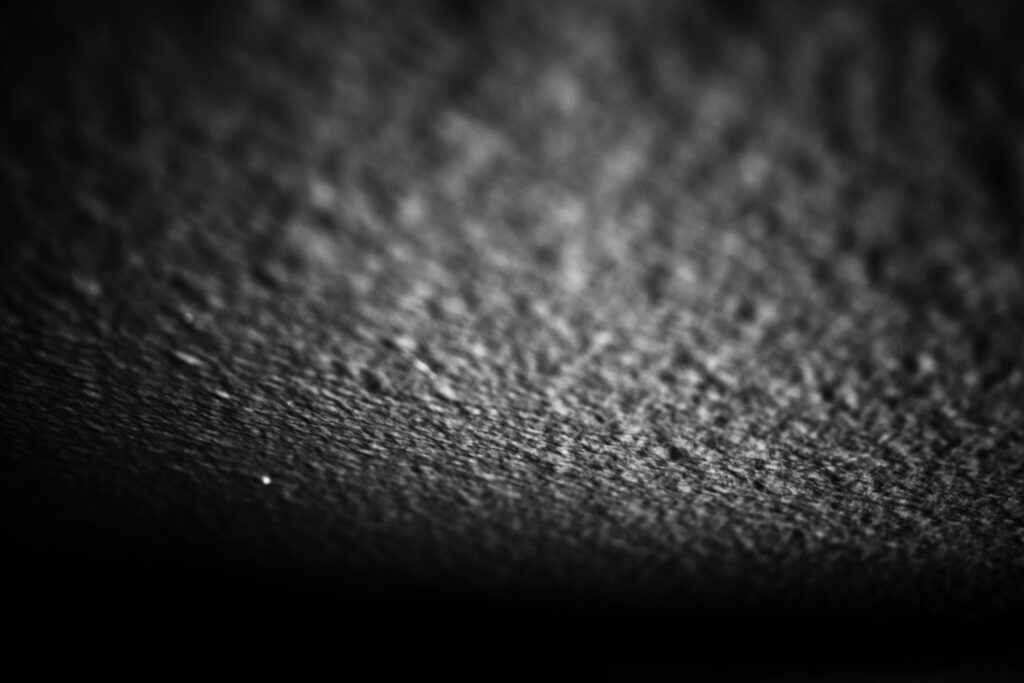
If you look at the top of the frame, it reads like ground.
Flat. Horizontal.
The kind of surface your body understands without thinking.
If you let your eyes drift downward, it turns into something else.
A drop.
A shadow.
A place where light gives up.
Nothing in the image actually changes.
Only your orientation does.
That was the experiment.
I wanted to see if I could make one surface hold two directions at once.
Road and void.
Plane and pull.
Stability and collapse sharing the same skin.
What makes it slightly absurd is that this isn’t a road at all.
It’s a wall.
An apartment wall.
Paint, age, light, and a lens pressed close enough to turn familiarity into ambiguity.
After I took the shots, I brought them into editing and started working the contrast. Not to “fix” it. But to push it. To test the second half of seeing: what the image becomes when you push it. What the mind supplies when the surface stops being polite.
The camera did exactly what it was told: capture.
The illusion came later.
The illusion isn’t in the wall.
It’s in the way the brain insists on finding footing, even when none is offered.
You can decide whether you’re looking across something or into it.
Whether it’s solid or opening.
Whether it’s holding or swallowing.
Both readings are correct.
Neither is confirmed.
This image wasn’t made to explain itself.
It was made to see how little was needed for perception to split.
Sometimes the work isn’t about the subject at all.
It’s about what happens when you stop asking the image to cooperate
and let the viewer finish the sentence themselves.